
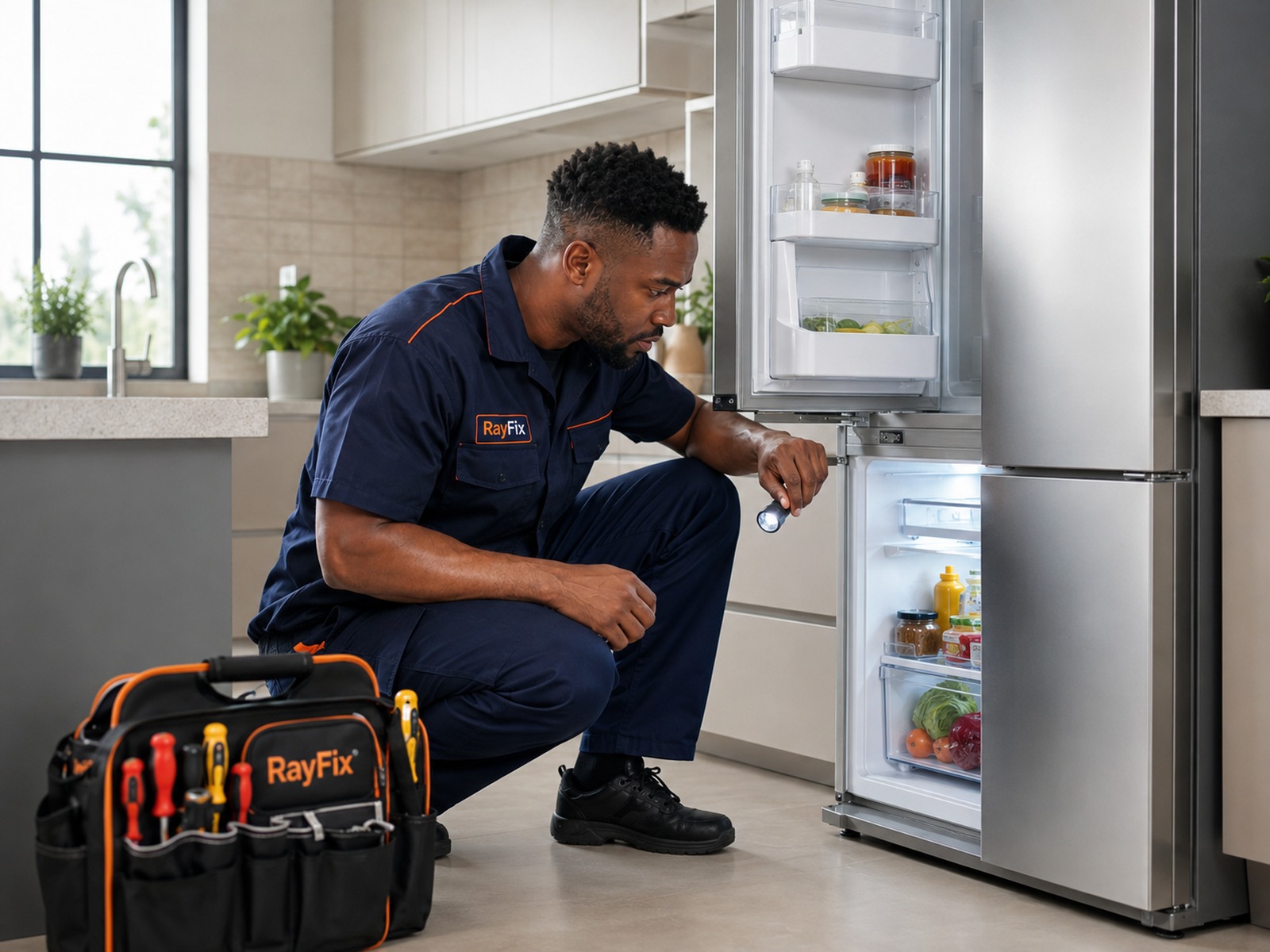
Tell RayFix what the appliance is doing.
A fridge or freezer that is losing temperature can quickly affect food, routines and electricity usage. RayFix handles cooling problems by starting with the exact behaviour of the appliance, the model configuration and when the temperature change began.
Common symptoms we help customers resolve.
Not cooling
Describe when it happens and whether the fault is constant or intermittent.
Freezer icing
Describe when it happens and whether the fault is constant or intermittent.
Water leaking
Describe when it happens and whether the fault is constant or intermittent.
Temperature fluctuating
Describe when it happens and whether the fault is constant or intermittent.
Intermittent operation
Describe when it happens and whether the fault is constant or intermittent.
Unexpected noise
Describe when it happens and whether the fault is constant or intermittent.
What can cause this problem?
RayFix does not assume the failed part from one symptom alone. These are common areas a professional assessment may consider.
Airflow restriction
Blocked vents, frost or fan problems can reduce cold-air circulation.
Temperature control
Sensors, thermostats or control settings may stop responding correctly.
Defrost system
Defrost faults can create heavy ice that restricts airflow.
Door sealing
Damaged or loose seals allow warm air and moisture into the cabinet.
Drainage
Blocked drains can cause water pooling, icing or leaks.
Cooling system
Relays, compressor-related components or refrigeration faults may affect temperature.

A clear diagnostic process, not guesswork.
We combine the symptom, appliance configuration, model information and site context before deciding what needs attention.
Temperature pattern
Whether both sections are warm or only one compartment is affected.
Fan & airflow
Air movement through the freezer and refrigerator sections.
Icing pattern
Where frost or ice develops and how quickly it returns.
Door & seals
Door alignment, seal condition and moisture entry.
Controls
Display, sensors, settings and error indications.
Noise & cycling
Unusual sounds, continuous running or frequent starting and stopping.
We start with the exact appliance configuration.
Models that look similar can use different controls and internal components. Send the model label when it is easy and safe to access.
- Top-freezer refrigerators
- Bottom-freezer refrigerators
- Side-by-side refrigerators
- French-door refrigerators
- Chest freezers
- Upright freezers

Make the first conversation more useful.
Keep the appliance powered unless there is a burning smell, repeated electrical tripping or another safety concern. Note the current temperature, unusual sounds, icing pattern and how long the fault has been present.
Stop when the symptom becomes unsafe.
Do not chip ice with sharp tools, remove refrigeration panels or repeatedly reset a tripping appliance. If there is smoke, sparking or a strong electrical smell, disconnect power only where it is safe to do so.
A simple repair journey from request to handover.
Request
Send appliance, symptom, model if known and suburb.
Clarify
We confirm useful details, access and service context.
Diagnose
The appliance behaviour and relevant systems are assessed.
Approve & repair
The next step is communicated before approved work proceeds.
Test & handover
Operation is checked and the outcome is explained.
Use diagnosis to make a better decision.
Age, overall condition, previous repairs, cooling-system condition, parts availability and replacement value all matter. A diagnosis gives you better information before deciding whether to repair or replace.
Keep the model number and fault history ready.
Exact appliance details help separate a straightforward repair from a larger condition or parts-availability decision.
Major appliance brands can be submitted for assessment.
Support depends on the exact model, appliance category, fault and parts situation. Send the full model code whenever possible.
More ways we can help.
Answers specific to this appliance category.
Why is my fridge running but not getting cold?
The appliance can run while airflow, defrost, sensors, fans or the cooling system are not working correctly. The temperature pattern helps narrow the diagnostic route.
Why is ice building up in my freezer?
Heavy frost can be linked to door sealing, moisture entry, airflow or defrost-system problems. The location and thickness of the ice are useful clues.
Can a leaking fridge be repaired onsite?
Many drainage, seal and accessible component faults can be assessed onsite. The exact repair depends on the source of the leak and the model.
What details should I send RayFix?
Send the brand, model if available, current temperature behaviour, whether the freezer is affected, any noise or icing and your suburb.
Tell RayFix what your fridge & freezer is doing.
Send the model if available, the symptom, your suburb and a photo where useful. We will use that information to guide the next step.